Better understanding
What do we have stronger reasons to believe?
For a flood service: what explains why some people cannot use a warning?
PHILOSOPHY · RESEARCH · PRACTICAL DESIGN
Life and Society in a Superintelligent Era
How can growing intelligence improve the conditions of life?
A framework for understanding the connections among people, AI, institutions, and the living world—and the decisions that shape what happens next.
For curious readers, builders, and decision-makers.
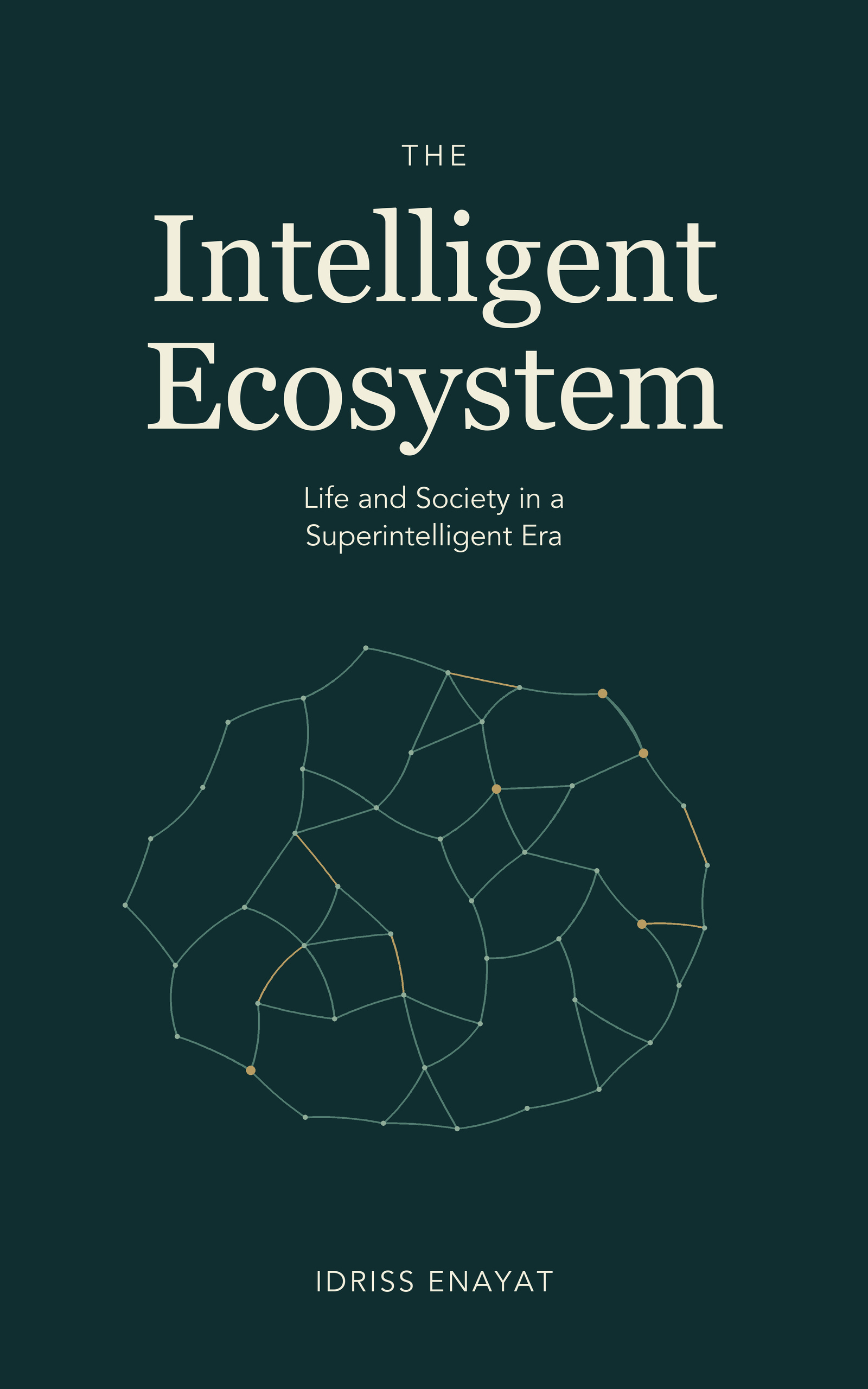 AVAILABLE IN PAPERBACK & KINDLE
THE CENTRAL QUESTION
A flood forecast can be accurate while a family has no way to reach safety. Medical expertise can be available while treatment remains out of reach.
This book follows the connections that make knowledge and capability useful: resources, dependable services, shared responsibility, and the ability of affected people to shape decisions.
It explores healthcare, education, work, infrastructure, and ecological restoration through research, philosophical inquiry, and proposed designs.
Superintelligence is a premise for inquiry here, not a claim about current systems or a prediction of when it will arrive.
An evolving network of humans, artificial intelligences, institutions, technologies, and living systems through which knowledge is developed, capabilities are improved, resources are coordinated, and actions change the conditions of life.
A WAY TO EXAMINE PROGRESS
What do we have stronger reasons to believe?
For a flood service: what explains why some people cannot use a warning?
What can we do more reliably?
Can a tested process produce clearer warnings with manageable review effort?
Who benefits, who bears a burden, and what changes for the living world?
Do people reach safety, and who remains exposed?
These lenses overlap, but evidence of progress through one does not establish progress through another.
YOUR PLACE IN THE ECOSYSTEM
You may build a system, commission a service, use a tool, or live with its consequences. Each position opens different questions.
Connect technical capability to the conditions of use. Identify the people, physical resources, institutions, and support your service depends on.
Which dependency could prevent your product from helping?
Examine commitments that continue after a launch: funding, accountability, access, and the authority to change course.
Who is responsible when the promised next step is unavailable?
Find a shared language for questioning proposals, recognizing overlooked interests, and participating in decisions that affect your life.
Whose experience needs to be heard before this decision is made?
FREE PRACTICAL STARTER
Use a short guide and a participant-and-dependency worksheet to examine one AI-enabled service or proposal.
A fictional flood-warning example shows how to move from a broad ambition to one bounded next action.
Free to access. No email signup or prior reading required.
The full worksheet adds evidence, boundaries, and responsibility.
READ THE BOOK
Twenty chapters combine philosophy, research, and practical design. Notes, an annotated bibliography, a glossary, and nine worksheets support further inquiry.
Paperback · 322 pages · ISBN 9798162758228
CONTINUE THE INQUIRY
The Intelligent Ecosystem Foundation develops the public inquiry introduced in this book. It brings the questions into research, practical tools, and learning together.
Start with a reading conversation, try the worksheet with your team, or contribute a question, critique, or experience from a place where these connections matter.
You can use the starter and begin a discussion without buying the book or signing up. The Foundation’s public work is developing; specific collaborations are agreed separately.
No. It takes superintelligence as a premise for inquiry: systems that exceed human performance across a broad range of important cognitive activities and can improve significant aspects of their own operation and development. It examines the responsibilities such capability would create without predicting its arrival.
No. The book is written for thoughtful general readers as well as builders and decision-makers. The starter resource begins with a concrete service, the people affected, and a decision you can examine.
It helps you organize questions, identify dependencies, and choose a next inquiry. A completed worksheet is not evidence that a system is safe, legitimate, or beneficial, and it does not authorize deployment.